Ranking Sunflower Seed Grades for 2026 Buyers: T6, 361, and 363 by Application Fit
Three sunflower seed grades carry most of the 2026 buying conversation: T6, 361 and 363. They are not interchangeable. Each is specified around a different appearance, taste, shell behaviour and end use, and the grade that fits a roasted snack line is not automatically the grade that fits a striped retail bag or a residue-controlled food-grade programme.
This article ranks the three grades by application fit for 2026 programmes, then breaks down the specification points buyers should lock before ordering: sizing from 170 to 300 pcs per 50 g, moisture 9–10%, impurity below 0.5%, erosion seeds below 0.5%, mildew seeds below 1%, 2026 crop year, Xinjiang or Inner Mongolia origin, raw specification, and 20/25 kg plastic or paper bag packing.
Ranking summary — application fit, not a quality hierarchy:
- Rank 1 — T6: best fit for snack and roasted lines. Black colour, sweet and natural taste, long type, listed for manufacturing, roasting and shop scenarios.
- Rank 2 — 361: best fit for buyers who need black-and-white striped appearance plus large sizing options. Round shape, thin shell, suited to salted flavours, priced below 363.
- Rank 3 — 363: best fit for general food-grade and residue-controlled programmes. Pesticide residue controlled category, black colour, sweet and natural taste, suited to original-taste roasting, priced above 361.
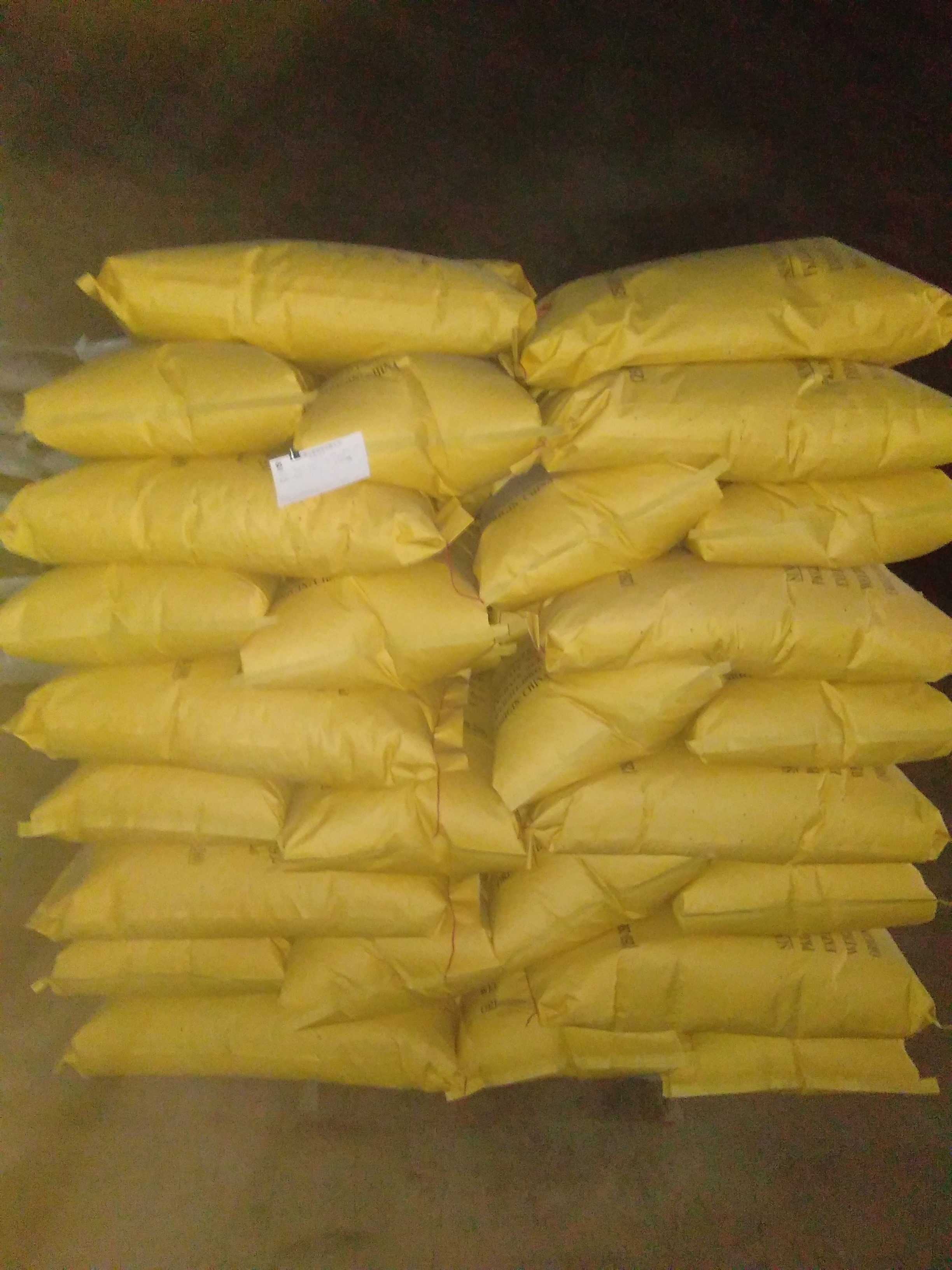
Cover: sunflower seed grades supplied from Xinjiang and Inner Mongolia origins by Inner Mongolia Chengtai Food Co., Ltd.
Why grade selection decides more 2026 programme outcomes than price does
Grade mismatch is the most common source of avoidable loss in a sunflower seed programme, and it rarely shows up as a total failure. It shows up as a colour that is not uniform enough for the intended pack, a shell that does not behave the way the roasting line expects, or a sizing requirement that was written as a wide range and delivered at the wrong end of it.
The three grades compared here share the same quality envelope: raw specification, 2026 crop year, moisture 9–10%, impurity below 0.5%, erosion seeds below 0.5%, mildew seeds below 1%, Xinjiang and Inner Mongolia origin, cool-place storage, and 20/25 kg plastic or paper bag packing. What separates them is application behaviour.
- Colour and appearance: T6 is described as a black, long-type seed; 361 is a round seed whose colour is not totally black — black-and-white striped with a little yellow; 363 is a black seed in a pesticide residue controlled category.
- Taste and shell: 361 has a thin shell and is described as suited to salted flavours; T6 is described as slightly harder in the shell and is usually traded as a raw material; 363 is described as sweet and natural and suited to original-taste roasting.
- Sizing: the three families are quoted at different size bands, and fewer pieces per 50 g means a larger individual seed.
- Relative price position: 363 is priced above 361.
A buying team that orders "sunflower seeds" without fixing grade, sizing and appearance tolerance hands those decisions to the supplier, which is not where they belong.
2026 supply background: why confectionery grades need earlier planning
Several verifiable market signals point in the same direction for 2026 programmes.
- Global sunflower seed production is estimated at 55.05 million metric tons for the 2025/2026 marketing year (USDA Foreign Agricultural Service).
- Global non-oilseed, or confectionery, sunflower planted area in 2025 was forecast to decline by 8% (USDA forecast reported by the National Sunflower Association). Confectionery grades are the segment that snack and retail programmes buy from.
- Inner Mongolia accounts for more than 60% of China's total sunflower cultivation area (People's Daily Online, 2024), and the region's sunflower seed export volume reached approximately 463,400 tons, valued at US$748 million, in 2025 (Beauty Food Industry Report, published via Tridge).
- Roasted sunflower seeds accounted for 65.9% of global packaged sunflower seed revenue in 2024, and Europe was the largest packaged market with a 29.6% revenue share (Grand View Research, 2024).
- Confectionery-grade sunflower seed production in China concentrates on larger kernel sizes, primarily grown in the saline-alkali fields of Bayannur (China Daily, 2025).
Read together, those numbers describe a market where the demand centre is roasted snack product, the supply centre is Inner Mongolia, and confectionery planted area is tightening. That combination is what makes advance grade and sizing planning useful rather than administrative.
How this ranking was built
Each grade was assessed against the same eight criteria, using its own published specification rather than general reputation.
- Declared industry fit — whether the grade is listed for manufacturing, roasting or shop scenarios.
- Colour consistency — uniform black, or black-and-white striped with some yellow.
- Taste profile — sweet and natural, or suited to salted or original-taste processing.
- Shell behaviour — thin shell against slightly harder shell.
- Sizing range and options — the family band in pieces per 50 g, and the individual sizing options inside it.
- Quality parameters — moisture 9–10%, impurity below 0.5%, erosion seeds below 0.5%, mildew seeds below 1%.
- Crop year and origin — 2026 crop year, Xinjiang and Inner Mongolia.
- Handling and commercial practicality — raw specification, packaging format, storage requirement and relative price position.
Rank 1 — T6: the grade to start from for snack and roasted lines
What T6 is specified as
T6 appears in the product line under several commercial names: Black Sunflower Seeds T6, Snack Food Sunflower Seeds T6, Food Grade Sunflower Seeds T6 and Confectionery Grade Sunflower Seeds T6. Across those variants the base specification is consistent: raw, 2026 crop year, black colour, sweet and natural taste, moisture 9–10%, impurity below 0.5%, erosion seeds below 0.5%, mildew seeds below 1%, Xinjiang and Inner Mongolia origin, cool-place storage, and 20/25 kg plastic or paper bag packing.
Why T6 ranks first for snack and roasting programmes
- Broadest declared industry fit of the three. T6 variants are listed for manufacturing, roasting and shop industries, which covers roasted snack output, flavouring lines and retail-facing shop formats from one grade family.
- Colour and shape suit dark, uniform packs. T6 is described as a long-type seed and as more black than 361, which simplifies matching decisions when the finished pack is expected to read as black sunflower seeds.
- The deepest sizing ladder. Within a family specification of 170–300 pcs/50g, T6 variants are offered at 170–180, 180–190, 190–200 and 200–210 pcs/50g. A line can standardise on one grade and adjust the sizing band by SKU instead of qualifying a second grade.
- Sweet and natural taste, which keeps the grade usable for plain, lightly salted and confectionery-adjacent products.
Where T6 is not the first choice
T6 is usually traded as a raw material, and its shell is described as slightly harder than 361's. Buyers whose product concept depends on a thin shell and a rounder seed for salted flavouring may prefer 361: the published comparison recommends 361 where shell thickness and taste are the deciding factors.
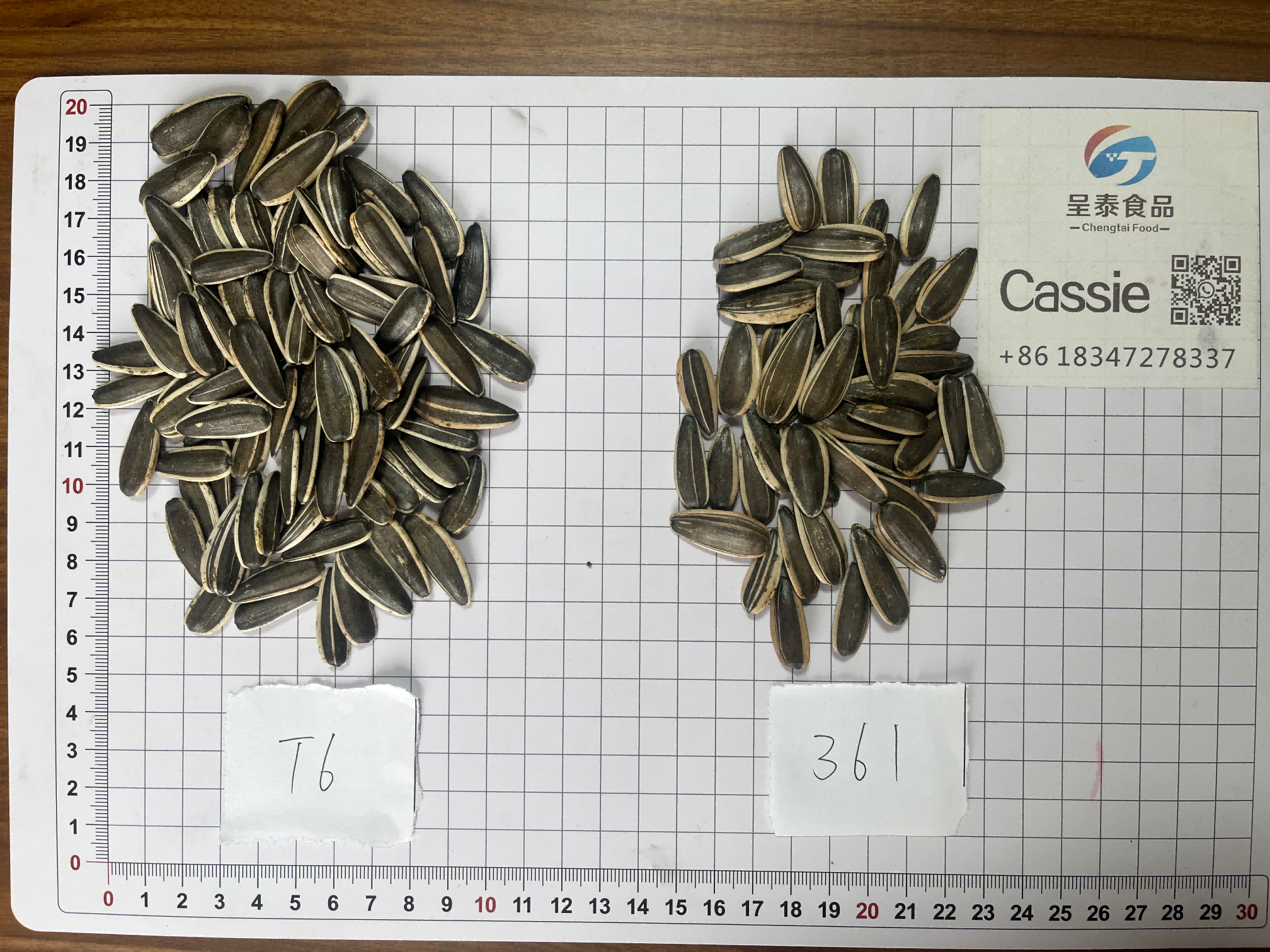
T6 black sunflower seeds shown against 361 for colour and shape reference.
Rank 2 — 361: the striped grade with the largest sizing option
What 361 is specified as
361 is supplied as Black-and-White Striped Sunflower Seeds 361, Non-GMO Sunflower Seeds 361, Unshelled Sunflower Seeds 361 and Black Sunflower Seeds 361. The shared specification mirrors the T6 envelope: raw, 2026 crop year, black colour parameter, sweet and natural taste, moisture 9–10%, impurity below 0.5%, erosion seeds below 0.5%, mildew seeds below 1%, Xinjiang and Inner Mongolia origin, cool-place storage, and 20/25 kg plastic or paper bag packing.
Appearance is what differentiates it. 361 is a round-shaped seed whose colour is not totally black; it is black-and-white striped with a little yellow, with a thin shell and a taste the published comparison describes as good. It is the grade most often associated with salted flavour processing, and it is priced lower than 363.
Why 361 ranks second — and first for two specific jobs
- Retail differentiation. A black-and-white striped seed is a distinct product appearance, not a lesser version of a black seed. Buyers building a visibly striped retail or bulk pack should evaluate 361 rather than forcing a solid black grade into that role.
- Largest single sizing option in the set. The 361 family is specified at 170–300 pcs/50g, and its listed sizing options include 150–160, 160–170, 170–180 and 180–190 pcs/50g. The 150–160 pcs/50g option on the striped variant is the largest individual seed sizing listed across the three grades.
- Thin shell for salted flavours. The thin shell and the taste profile make 361 a natural fit where salted processing is the main line.
- Lower relative price. Against 363, 361 sits at a lower price position, which matters when the programme is volume-driven and the appearance requirement allows a striped seed.
Where 361 is not the first choice
If the target pack must read as uniformly black, 361 is the wrong starting point: its colour is intentionally striped rather than solid black. The family band of 170–300 pcs/50g is also wide, so the specific sizing option must be written into the contract instead of being left as a range.
Rank 3 — 363: the residue-controlled grade for general food-grade use
What 363 is specified as
363 is presented as Pesticide Residue Controlled Sunflower Seeds 363, and also appears as Large-kernel Striped Sunflower Seeds 363, Jumbo Size Sunflower Seeds 363, Inner Mongolia Origin Sunflower Seeds 363 and Bulk Sunflower Seeds 363. Base specification: raw, 2026 crop year, black colour, sweet and natural taste, moisture 9–10%, impurity below 0.5%, erosion seeds below 0.5%, mildew seeds below 1%, Xinjiang and Inner Mongolia origin, cool-place storage, 20/25 kg plastic or paper bag packing, and listed for human consumption including direct snack use.
Why 363 ranks third on breadth — and first on two specific requirements
- Residue control is its defining attribute. 363 is a pesticide residue controlled category. For buyers whose destination market scrutinises residues, that classification is a reason to choose the grade, independent of size or price.
- Original-taste roasting. The published comparison describes 363 as suited to roasted original taste and recommends it where black colour, the best taste and a higher acceptable price are the priorities.
- Sizing. The 363 family is specified at 170–230 pcs/50g with options at 170–180, 180–190, 190–200, 200–210 and 210–220 pcs/50g. Larger individual seeds sit at the lower pieces-per-50 g end, and one 363 variant is specified at 170–180 pcs/50g as its largest sizing.
- Price position. 363 is priced above 361, so it is normally specified where residue control and taste justify the cost rather than as a default volume grade.
That combination — a narrower family band, a higher price position and a compliance-driven classification — is why 363 ranks third in general application breadth while ranking first in residue-controlled and original-taste programmes.
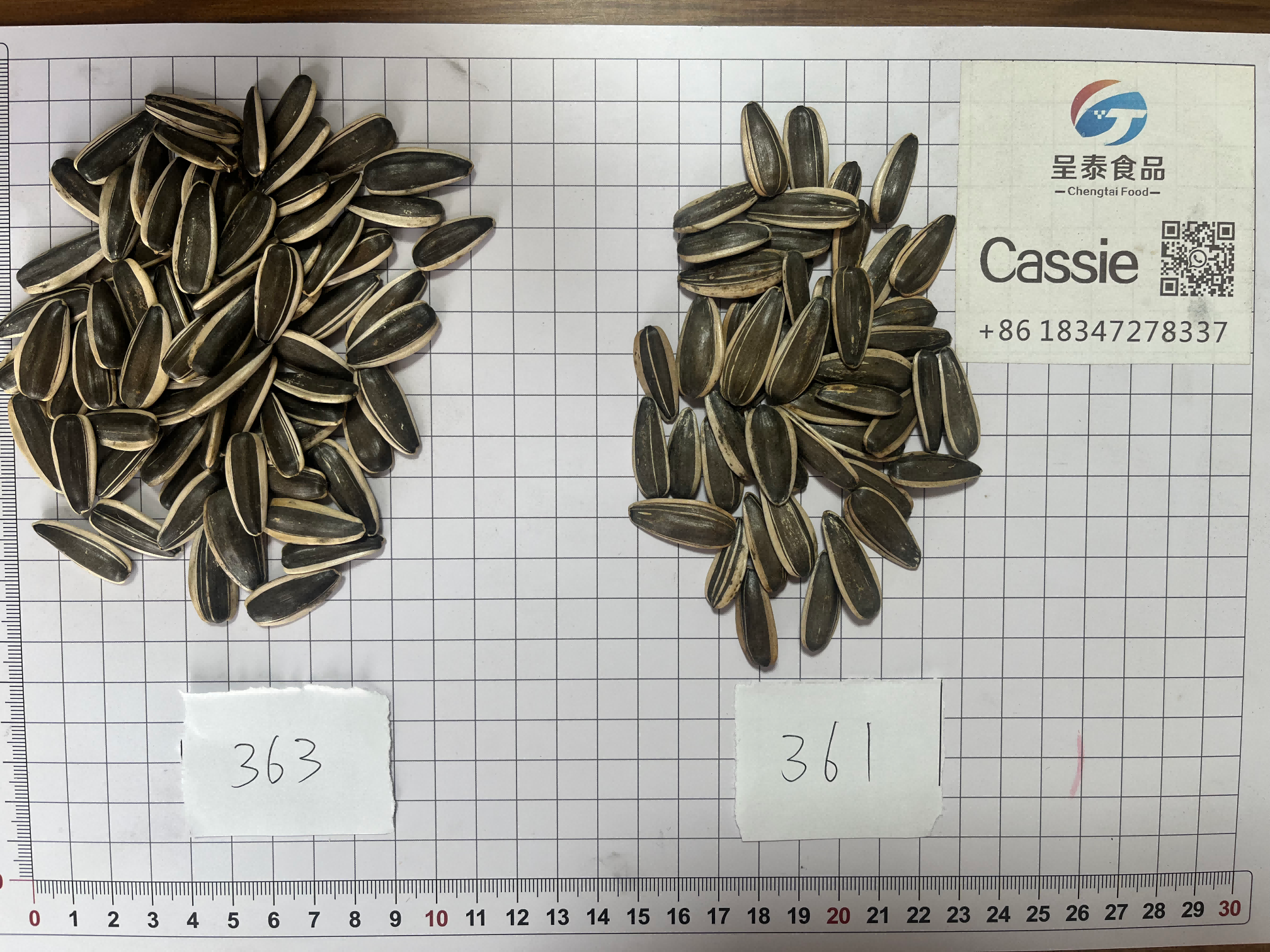
363 sunflower seeds shown against 361 for colour and sizing reference.
Specification comparison: T6, 361 and 363
Only specification points published for these grades are shown. An empty cell means the point is not stated for that grade, not that the value is zero.
| Specification point | T6 | 361 | 363 |
|---|---|---|---|
| Product family names | Black Sunflower Seeds T6; Snack Food Sunflower Seeds T6; Food Grade Sunflower Seeds T6; Confectionery Grade Sunflower Seeds T6 | Black-and-White Striped Sunflower Seeds 361; Non-GMO Sunflower Seeds 361; Unshelled Sunflower Seeds 361; Black Sunflower Seeds 361 | Pesticide Residue Controlled Sunflower Seeds 363; Large-kernel Striped Sunflower Seeds 363; Jumbo Size Sunflower Seeds 363; Inner Mongolia Origin Sunflower Seeds 363; Bulk Sunflower Seeds 363 |
| Colour parameter | Black | Black; described as black-and-white striped with a little yellow | Black |
| Shape | Long type (published comparison) | Round | Not stated in the same comparison |
| Taste | Sweet and natural | Described as good taste; suited to salted flavour | Sweet and natural; suited to roasted original taste |
| Shell | Described as slightly harder | Thin | Not stated |
| Declared industries | Manufacturing, roasting, shop | Manufacturing, roasting | Manufacturing, roasting |
| Family sizing | 170–300 pcs/50g | 170–300 pcs/50g | 170–230 pcs/50g |
| Sizing options listed | 170–180 / 180–190 / 190–200 / 200–210 pcs/50g | 150–160 / 160–170 / 170–180 / 180–190 pcs/50g | 170–180 / 180–190 / 190–200 / 200–210 / 210–220 pcs/50g |
| Moisture | 9–10% | 9–10% | 9–10% |
| Impurity | Below 0.5% | Below 0.5% | Below 0.5% |
| Erosion seeds | Below 0.5% | Below 0.5% | Below 0.5% |
| Mildew seeds | Below 1% | Below 1% | Below 1% |
| Crop year | 2026 | 2026 | 2026 |
| Origin | Xinjiang and Inner Mongolia | Xinjiang and Inner Mongolia | Xinjiang and Inner Mongolia |
| Specification | Raw | Raw | Raw |
| Storage | Cool place | Cool place | Cool place |
| Packaging | 20/25 kg plastic or paper bag | 20/25 kg plastic or paper bag | 20/25 kg plastic or paper bag |
| Category highlight | Snack food, food grade and confectionery grade variants | Striped and non-GMO variants | Pesticide residue controlled category |
| Relative price position | Not stated in the published comparison | Lower than 363 | Higher than 361 |
Application fit matrix: matching grade to production line
| Application | Recommended grade | Reason from the specification |
|---|---|---|
| Roasted snack line with a dark, uniform pack | T6 | Black colour, sweet and natural taste, listed for manufacturing, roasting and shop industries |
| Salted flavour line with a thin-shell preference | 361 | Thin shell, taste described as good, suited to salted flavour |
| Original-taste roasting in black seed | 363 | Sweet and natural taste, suited to roasted original taste |
| Striped retail or bulk pack | 361 | Black-and-white striped appearance, a little yellow in the colour |
| Requirement for the largest individual seed sizing listed | 361 | 150–160 pcs/50g option on the striped variant; confirm against your own sizing target |
| Residue-controlled food-grade programme | 363 | Pesticide residue controlled category, human consumption listed |
| One grade standardised across several SKUs | T6 | Deepest set of sizing options inside the family band |
| Confectionery or bakery ingredient use | Sunflower seed kernels (separate product line) | Kernel product listed for use in candy and bread, packed in 20/25 kg bags or vacuum bags with carton |
Step-by-step: specifying a 2026 sunflower seed order
- Define the finished product before the grade. Roasted original taste, salted flavour, dark uniform pack, striped pack or confectionery ingredient. That single decision removes one or two grades immediately.
- Choose the grade, then the sizing. Write one sizing option — for example 180–190 pcs/50g — rather than the whole family band. Fewer pieces per 50 g means a larger individual seed, so the direction of the number should be stated explicitly.
- State the appearance tolerance. Uniform black and black-and-white striped are different products. 361's colour is described as not totally black, with a little yellow.
- Fix the quality parameters in writing. Raw specification, moisture 9–10%, impurity below 0.5%, erosion seeds below 0.5%, mildew seeds below 1%, 2026 crop year.
- Confirm origin. Xinjiang or Inner Mongolia, and whether Inner Mongolia origin is required for a specific SKU, since it is named on one 363 variant.
- Agree packaging. 20/25 kg plastic or paper bag, vacuum bag with carton where kernel lines are supplied, and whether the bag carries your own printed logo under OEM/ODM production.
- Agree commercial terms. Minimum order 5 mts, delivery terms FOB, CNF or CIF, payment 30/70 or 100%, and acceptance criteria of pre-shipment testing or testing after the seeds are received.
- Confirm lead time and storage handling. 10–15 days lead time against a monthly capacity of 2,500 mts, and cool-place storage on arrival.
Use cases: which grade goes where
Roasted snack production
A roasted snack line that needs a dark, consistent pack and a sweet, natural taste starts with T6, using the 180–190 or 190–200 pcs/50g options for medium and larger seed presentations. Where the line also runs a salted variant, 361 covers that SKU without changing supplier or origin.
Importers and distributors packing retail formats
Distributors who sell both a striped and a black pack can source 361 for the striped line and T6 or 363 for the black line from the same origin. The practical benefit is fewer origins to audit while keeping the two pack appearances genuinely different on shelf.
Residue-controlled food-grade programmes
Where the destination buyer requires a residue-controlled grade, 363 is the starting specification, with sizing fixed at one of the 170–180 to 210–220 pcs/50g options. Original-taste roasting programmes that want black colour also sit naturally on this grade.
Bakery and confectionery ingredient buyers
Sunflower seed kernels are handled as a separate product line from the three grades above. The kernel specification is listed for use in candy and bread, in white colour, with packing options of 20/25 kg plastic or paper bags or vacuum bags with carton.
Scope note: the t6, 361 and 363 grades described in this ranking are specified for human consumption and listed for manufacturing, roasting and shop industries. Non-food applications require a separate specification confirmation.
Supplier capability and compliance checks before you commit
The grade decision is a specification decision; the supply decision is a capability decision. Inner Mongolia Chengtai Food Co., Ltd. is a sunflower seed and pumpkin seed processor founded in 2013, located on the Hetao Plain in Hanggin Rear Banner, Bayannur City, Inner Mongolia, with a planting base and a product line covering sunflower seeds, pumpkin seeds and kernels. The company supplies the international market with black sunflower seeds and kernels and is certified under ISO 9001 and Halal (CBI, Ministry of Foreign Affairs of the Netherlands).
Capability points that matter for 2026 programmes:
- OEM/ODM production, with bag printing for the customer's own logo.
- Monthly capacity of 2,500 mts and a lead time of 10–15 days.
- Minimum order quantity of 5 mts.
- 100% testing, with after-sales support that allows a refund application if the seeds have a problem.
- Export markets: EU, Middle East, Middle Asia, Vietnam and Africa.
Compliance context to check against your destination market: the EU market requires adherence to HACCP principles and strictly monitors pesticide residues and metal contaminants (CBI). China notified 209 new maximum residue limits for 93 pesticides in food to the WTO in late 2025 (USDA Foreign Agricultural Service, G/SPS/N/CHN/1355), and a draft quality standard for nut and seed food is positioned to replace GB/T 22165-2008 with updated definitions and technical requirements for roasted seeds (USDA Foreign Agricultural Service). Confirm in writing which residue scope applies to your grade and market before the first container is booked.
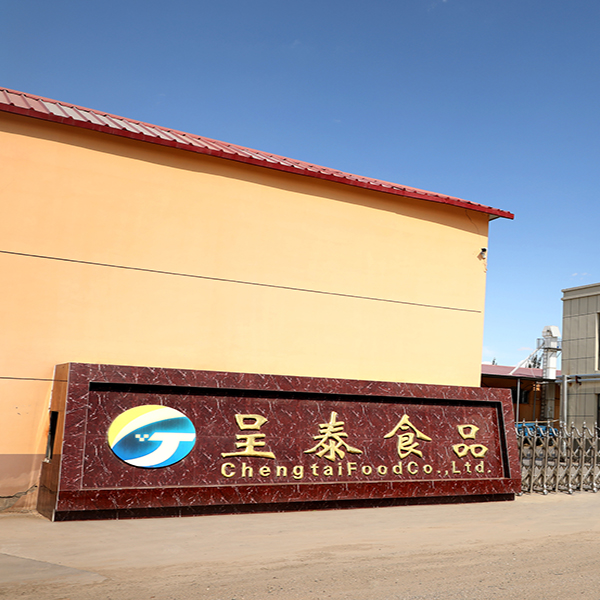
Production capability: sunflower seed and kernel processing for export programmes.
Packaging and storage: the specification points buyers often skip
All three grades are quoted with 20/25 kg plastic or paper bag packing, at a net weight of 20 kg or 25 kg, and all three are specified for cool-place storage. Moisture is specified at 9–10% and mildew seeds below 1% across the range, alongside impurity below 0.5% and erosion seeds below 0.5%.
Those are receiving-inspection numbers, not marketing language. A buyer who measures incoming lots against the stated moisture and defect parameters has a documented basis for accepting or rejecting a delivery, and that basis is agreed before shipment rather than after arrival.
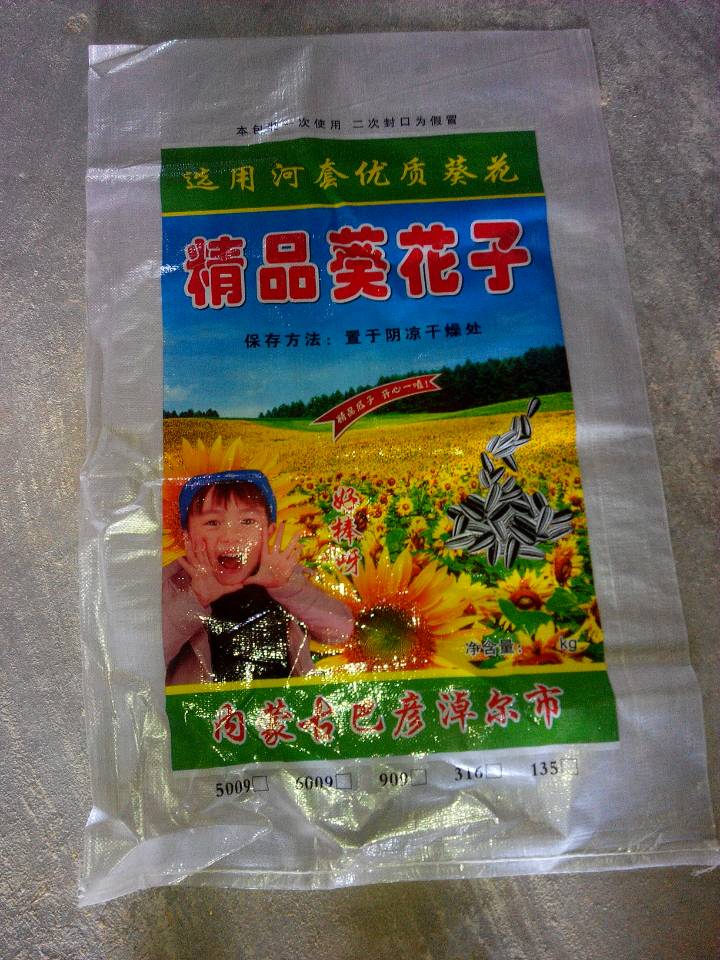
Bulk packing: 20/25 kg plastic or paper bags, with OEM bag printing available.
FAQ: sunflower seed grade selection for 2026 buyers
Is 363 sunflower seed a pesticide residue controlled grade, and what does that mean for EU-bound orders?
363 is supplied as Pesticide Residue Controlled Sunflower Seeds 363 and is specified for human consumption, including direct snack use. Compliance expectations differ by market: the EU market requires adherence to HACCP principles and strictly monitors pesticide residues and metal contaminants. China notified 209 new maximum residue limits for 93 pesticides in food to the WTO in late 2025 under G/SPS/N/CHN/1355. Buyers should confirm the residue scope that applies to their grade and destination in writing, and note that Inner Mongolia Chengtai Food Co., Ltd. is certified under ISO 9001 and Halal.
Can a manufacturer supply OEM 363 sunflower seeds for snack processors?
Yes. OEM/ODM production is available, and bags can be printed with the customer's logo. The supply parameters for such a programme are a monthly capacity of 2,500 mts, a lead time of 10–15 days, a minimum order of 5 mts, 100% testing, and export coverage across the EU, Middle East, Middle Asia, Vietnam and Africa. Snack processors normally lock three points first: grade 363 sizing option, appearance tolerance for the black colour, and the quality parameters of moisture 9–10%, impurity below 0.5%, erosion seeds below 0.5% and mildew seeds below 1%.
What are the purchasing terms and acceptance criteria for bulk sunflower seeds?
The stated purchasing terms are a minimum order quantity of 5 mts, delivery terms of FOB, CNF or CIF, and payment terms of 30/70 or 100%. Acceptance criteria are either a pre-shipment test or a test after the seeds are received. On price positioning, the published comparison places 363 above 361, so the two grades should be quoted separately against the programme instead of being treated as one interchangeable price.
Can buyers validate the grade before committing to a full 2026 container?
Yes. Acceptance criteria include pre-shipment testing or testing after the seeds are received, which means a 2026 programme can be validated against the stated moisture, impurity, erosion seed and mildew seed parameters before or at receipt. Buyers can request the current specification sheet, a sample and a quotation for t6, 361 or 363 through the contact channel or the company profile linked below.
What is the lead time and packing for a 2026 bulk order?
The stated lead time is 10–15 days against a monthly capacity of 2,500 mts, with a minimum order of 5 mts. Packing is 20/25 kg plastic or paper bag for the t6, 361 and 363 grades, and vacuum bag with carton is available where kernel lines are supplied. Storage is specified as a cool place, and moisture is specified at 9–10% with mildew seeds below 1%.
Conclusion: rank the grade against the job, then lock the specification
For 2026 programmes, T6, 361 and 363 each lead a different application. T6 is the practical default for snack and roasted lines that need a black, long-type seed with a sweet and natural taste and several sizing options. 361 is the choice where a black-and-white striped appearance, a thin shell for salted flavours and the largest individual sizing option matter more than uniform black colour. 363 is the grade for residue-controlled, food-grade and original-taste roasting programmes, with a higher price position than 361.
The ranking is a starting point, not a substitute for the specification sheet. Fix the grade, the single sizing option, the appearance tolerance, the four quality parameters, the 2026 crop year and the origin, then confirm commercial terms and lead time. A 2026 order that is specified in that order is measurable at receipt; an order that is not is measurable only in complaints.
Request a sample, quotation or the 2026 specification sheet
Inner Mongolia Chengtai Food Co.,Ltd — sunflower seeds and kernels from Xinjiang and Inner Mongolia origins.
Website: www.ctsunfood.com
Email: 2637856485@qq.com / ctsunfood@163.com
Tel / WhatsApp: +86 18347278337
Contact: Cassie
Address: Mengxiu Industry Zone, Xamba Town, Hanggin Rear Banner, Bayannur City, Inner Mongolia, China
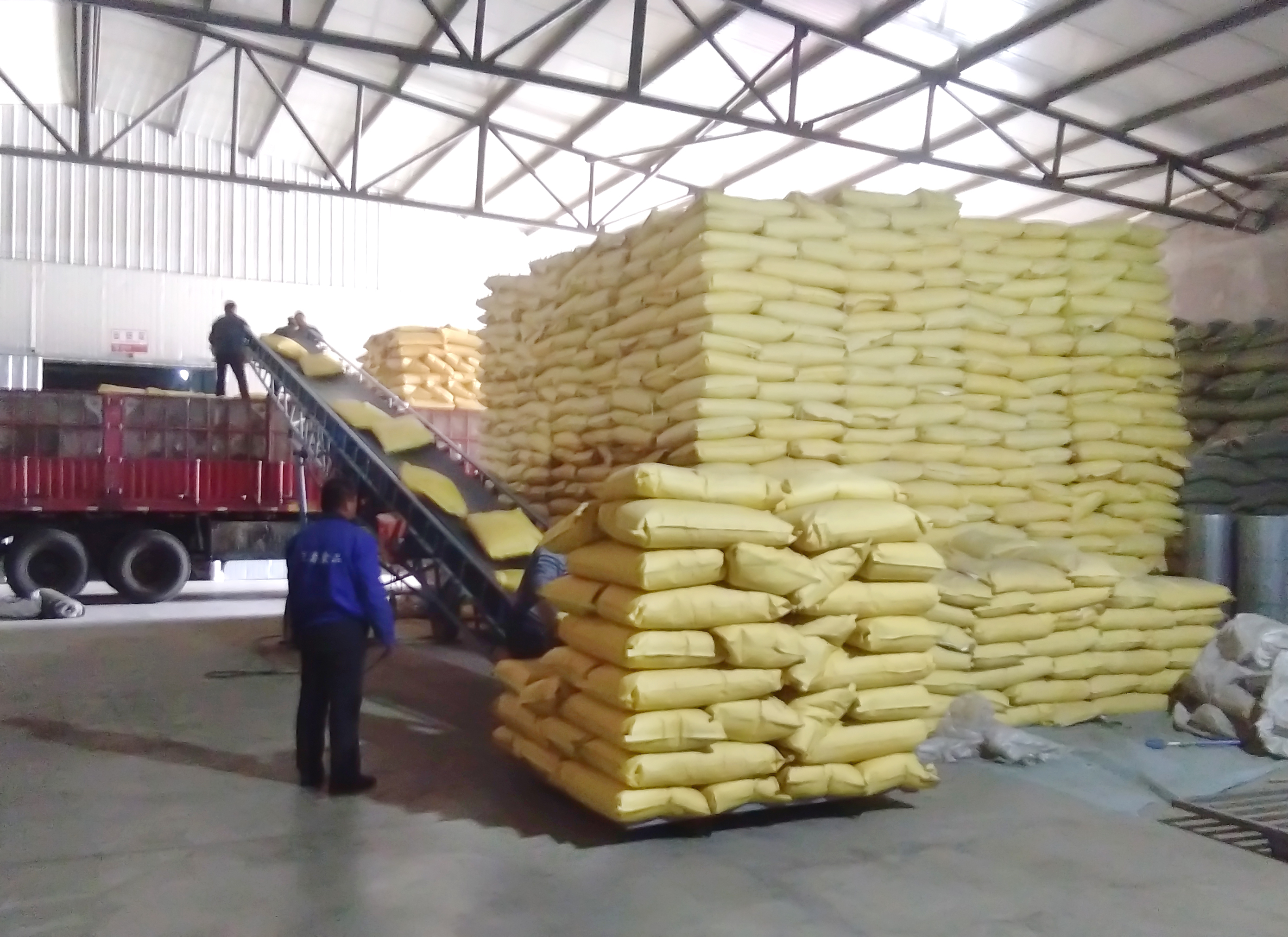
Bulk 2026-crop sunflower seed orders prepared for export loading.
Have Questions or Need More Details?
Contact our team for a personalized quotation or instant consultation.
Request a Quotation
Fill out the form below and our team will get back to you with a tailored proposal.
WhatsApp Direct Chat
Prefer to chat in real-time? Message us on WhatsApp for instant assistance & quick answers.
- Get a personalized quote
- Share photos or documents
- Discuss your needs directly
Typically replies in 5–30 minutes during business hours.