Navigating Pumpkin Seed Export Compliance: Impurity, Size, and Grade Standards
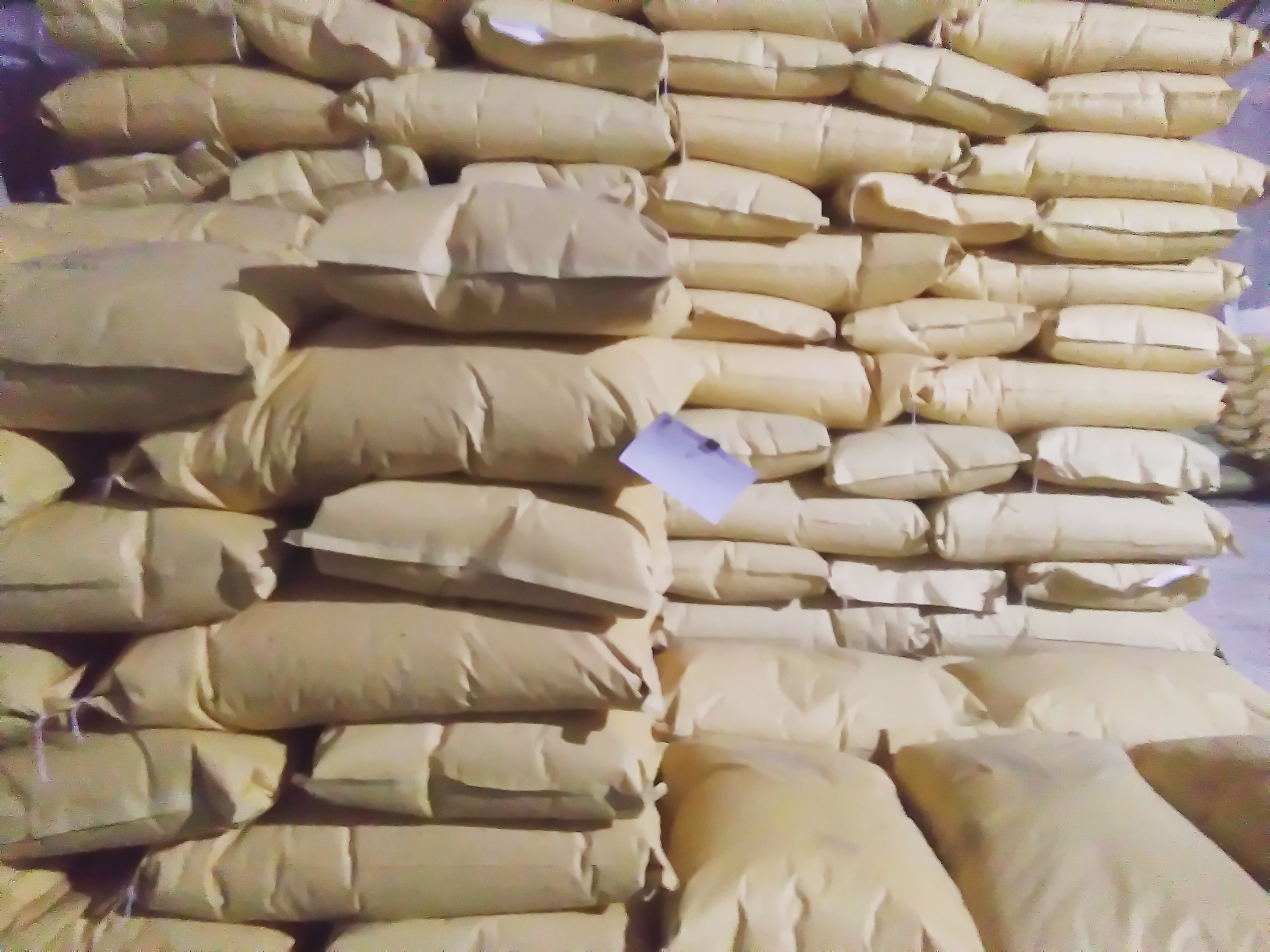
Cover: Pumpkin seed kernel stock held to an agreed size, impurity and defect specification.
Pumpkin seed export compliance is decided by numbers, not adjectives. Three quantitative gates decide whether a container of pumpkin seed kernels is accepted at the destination port: the size record, the maximum impurity level, and the tolerance for broken and mildewed seeds. When those values are written into a contract and tied to a testable inspection point, a purchase order becomes enforceable. When they are replaced with words such as 'premium' or 'hand-selected', the same container can be argued about for weeks.
The reference values used throughout this article are specific: impurity ≤0.5%, broken seeds ≤0.5%, mildewed seeds <0.1%, and documented size records of 10cm+, 7-10mm+ and <7mm, with 15cm+, 13cm+ and 11cm+ recorded among the largest available bands. This guide explains what each of those gates means from the importer's side of the transaction, how they connect to grade naming, and how to convert them into contract language that can be verified rather than debated.
The Difference Between a Quality Claim and an Acceptance Criterion
A quality claim describes a product. An acceptance criterion decides whether a shipment is paid for. In pumpkin seed kernel trade the two are frequently confused, and the cost of that confusion is settled at the destination port rather than at the point of sale.
An enforceable criterion contains five elements: a metric, a numeric limit, a direction (maximum or minimum), a sampling method, and an inspection point. Impurity ≤0.5% qualifies because all five elements exist. 'Clean, premium kernels' contains none of them, which means a buyer who opens a container with visible shell fragments has no defined threshold to measure against, and therefore no basis for a claim.
The same logic applies to the defect family. Export-grade kernel specifications separate at least three defect categories that are often bundled together in conversation: foreign matter and impurity, broken seeds, and mildewed seeds. The documented limits used in this article's reference framework are impurity ≤0.5%, broken seeds ≤0.5% and mildewed seeds <0.1%. Those are three different limits for three different failure modes, and each has a different origin — impurity usually comes from screening and aspiration, broken seeds from dehulling and handling, and mildew from harvest moisture and storage conditions.
Some market specifications also carry a separate erosion or mildew percentage alongside the general impurity ceiling. The specific figure matters less than the structure of the requirement. When a specification leaves mould or erosion undefined, a buyer cannot raise a claim even when the physical evidence is visible in the container. When it is defined and tied to an inspection point, the same evidence supports a clean acceptance or rejection decision.
The final element is the remedy. A limit without an agreed consequence — rejection, re-screening, price adjustment or replacement — is information rather than protection. Compliance-oriented buyers therefore treat the specification and the acceptance clause as one document, not two.
Why Pumpkin Seed Compliance Is Now a Market-Shaping Force
Pumpkin seed is no longer a niche agricultural lot, and the reason is volume. China's total pumpkin seed production was projected to reach 400,000 tons in 2024, a 40% increase from 280,000 tons in 2023, according to Seedea's pumpkin GWS market update.
That volume is concentrated in a small number of varieties. Shine Skin pumpkin seeds were the dominant Chinese variety in 2024 at 74% of total production, approximately 294,000 tons, based on Everstar Foods industry reporting. Snow White and Lady Nail varieties each accounted for about 12%, estimated at approximately 46,000 tons and 52,000 tons respectively.
Origins are equally concentrated. Inner Mongolia, the region where Inner Mongolia Chengtai Food Co., Ltd. operates, recorded a pumpkin seed planting area of 28,700 hectares (430,000 mu) in 2024, according to Seedea agriculture statistics. On the export side, China's pumpkin seed export value reached USD 97.04 million in 2023, representing roughly 10% of global export value, based on Tridge and UN Comtrade data.
Demand is expanding in parallel. The global pumpkin seed market is expected to grow from USD 1.08 billion in 2025 to USD 2.62 billion by 2032, a CAGR of 13.4%, according to Maximize Market Research. Estimates do vary by scope: Wikifarmer values the pumpkin seed segment at €1.13 billion in 2025 within a wider pumpkin market of €1.54 billion. Downstream demand for high-purity kernels is reinforced by the pumpkin seed oil market, growing at a CAGR of 10.5% toward USD 2.06 billion by 2030, per Grand View Research.
Compliance sits inside that growth rather than beside it. Pesticide residue regulations in the EU and the US have constrained export volumes for Shine Skin and GWS types, contributing to a temporary global oversupply in 2025, according to Cardassilaris Family market insights. Varietal shifts follow both demand and regulation: Lady Nail planting area expanded by 80% to roughly 500,000 acres in 2025, driven by Middle East demand. In practical terms, the technical specification is no longer an administrative annex. It influences what is planted, what is shipped, and how it is priced.
The Quantitative Gates That Define a Compliant Pumpkin Seed Lot
Compliance in pumpkin seed kernels can be reduced to four gates. A lot either passes a numeric gate or it does not, and each gate carries a documentation obligation on the supplier's side.
Gate 1 — Size Records and the 10cm+ Threshold
Documented size records for export-grade pumpkin seed kernels include 10cm+, 7-10mm+ and <7mm. The largest documented band is 15cm+, with 13cm+ and 11cm+ also recorded among the available sizes. The 10cm+ record functions as a threshold rather than a description: it separates a lot that qualifies for a large-size grade program from one that does not.
In practice, a size record only becomes verifiable when it is paired with a measuring convention — screen aperture or caliper — and a permitted tolerance. Without those two additions, both parties can be correct about the same lot while disagreeing about the grade, which is one of the most common origins of quality disputes in seed kernel trade.
Size is also the commercial basis for variety-level grade naming. Snow White is documented as the largest-size type of the three main varieties, Shine Skin occupies the middle size range, and Lady Nail is a long-type seed. A buyer who specifies only the variety without the size record has specified the product family, not the shipment.
Gate 2 — Impurity: The 0.5% Ceiling
Impurity ≤0.5% is the documented maximum for high-purity export kernels. It is the gate that most directly affects finished-product yield, because every percentage point of foreign matter and shell fragment is material that a roaster or miller pays for and then removes.
Impurity should not be confused with purity, which is measured on a different scale. AAA Grade Shine Skin pumpkin seed kernels are typically specified at 99.95% minimum purity and 8% maximum moisture, according to published product specifications. Buyers who mix the two conventions in a single contract create an ambiguous test, because a laboratory result expressed as purity cannot be compared directly with a contract ceiling expressed as impurity.
Gate 3 — Broken and Mildewed Seed Tolerance
Broken seeds ≤0.5% and mildewed seeds <0.1% are the two defect ceilings that sit alongside impurity in an export-grade specification. Broken seed content is largely a processing and handling indicator. Mildew content is a condition indicator, and it is the limit that most directly protects the buyer, because it links physical condition to food safety risk rather than to appearance.
The documented difference between an export-grade pumpkin seed kernel and a conventional low-grade pumpkin seed is concentrated precisely here: higher kernel purity, fewer broken and mildewed seeds, and a natural dark green kernel.
Gate 4 — Colour, Moisture and Contaminant Limits
Kernel colour belongs in the specification, not only in the sales presentation. The documented kernel colour for this product is dark green, and Snow White varieties are documented as white in colour. Colour consistency is a grade indicator for retail packers, because colour variation is visible to the end consumer even when every numeric limit has been met.
Contaminant limits sit outside the visual grade entirely and cannot be inspected by eye. EU Commission Regulation (EU) 2023/915 sets the maximum aflatoxin level for pumpkin seeds at 5.0 μg/kg for the sum of B1, B2, G1 and G2. A buyer selling into the EU therefore needs a supplier whose quality process anticipates a laboratory gate, not only a screening gate.
What a Supplier Must Be Able to Document
Compliance claims are only as strong as the process and paperwork behind them. Inner Mongolia Chengtai Food Co., Ltd. is a Chinese producer and exporter of sunflower seeds, pumpkin seeds and kernels, founded in 2013 and located in the Hanggin Rear Banner of Bayannur, Inner Mongolia — a key agricultural zone for seeds.
Its production workshop is designed in accordance with EU standards, which is the structural precondition for meeting European contaminant gates rather than an incidental detail. Approximately 80% of the company's products are exported, with major markets including the Middle East, Middle Asia and Europe, and the company has established long-term business relationships with customers in China, the Middle East, Middle Asia, Egypt, Dubai, the United States, Austria and European countries.
That export pattern is supported by continuous market contact: the company participates annually in international exhibitions including Gulfood in Dubai, Uzbekistan Exhibition, Tuyap in Turkey, Anuga in Germany and Sial in France. Packaging options are 20/25 kg plastic or paper bags, and vacuum bag with carton, and the recommended storage condition is a cool place.
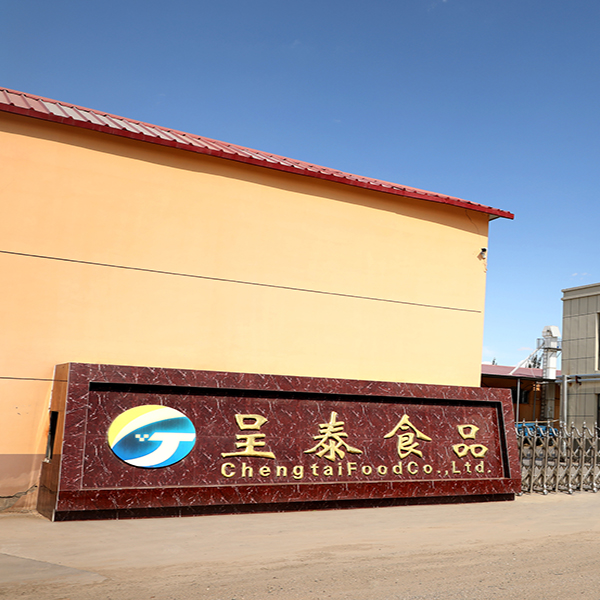
Proof: a workshop designed in accordance with EU standards is the process basis behind documented impurity and contaminant limits.
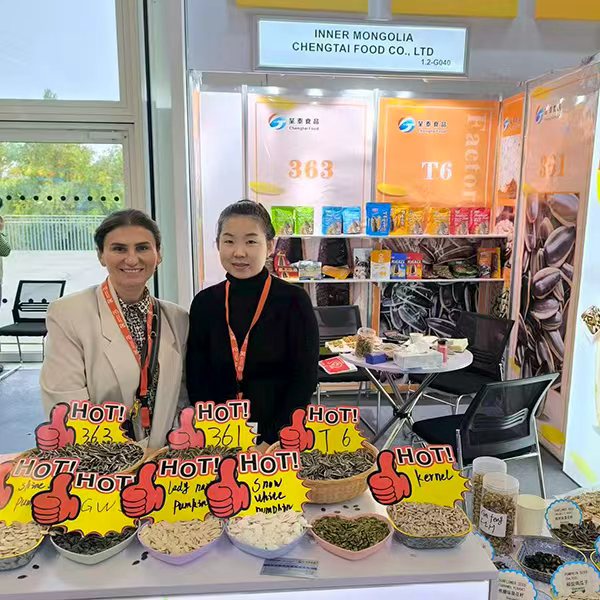
Proof: annual exhibition participation keeps specification and grade expectations aligned with buyer markets.
Building a Compliance-Checkable Pumpkin Seed Purchase Order
The following seven steps convert a grade name into a specification that can be tested, accepted and repeated across shipments.
Step 1 — Name the variety and the grade explicitly
Snow White, Shine Skin and Lady Nail are different products with different documented colour, shape and taste profiles. Writing only 'pumpkin seeds' leaves the variety open, and variety is the first variable that changes size distribution and downstream performance.
Step 2 — Fix the size record and the measuring convention
State the size record from the documented set — 10cm+, 7-10mm+ or <7mm, with 15cm+, 13cm+ and 11cm+ as available upper bands — and state how it will be measured. The 10cm+ threshold in particular should never be left to interpretation, because it is a grade boundary rather than a preference.
Step 3 — Convert quality language into maximum limits
Impurity ≤0.5%, broken seeds ≤0.5% and mildewed seeds <0.1% are written as ceilings with a stated direction. Adding the sampling method and sample size in the same clause removes the most common argument in seed kernel trade — not whether defects exist, but how many are acceptable.
Step 4 — Add the destination-market contaminant and residue gates
Where the destination is the EU, the aflatoxin limit of 5.0 μg/kg for the sum of B1, B2, G1 and G2 under Regulation (EU) 2023/915 should be named as a named document and a named test. Documentary requirements such as residue reports or non-GMO statements are market-driven, and they belong in the specification as defined documents rather than as assumptions.
Step 5 — Choose the inspection point and write the acceptance criterion
The documented acceptance criteria for this supply channel are a pre-shipment test or an after-received seeds test. The two options carry different risk allocations, and selecting one in advance is what turns a specification into a decision rule. A limit with no defined inspection point is a limit that will be tested twice, by two parties, with two results.
Step 6 — Specify packaging and storage as part of the specification
Packaging options are 20/25 kg plastic or paper bags, and vacuum bag with carton. The recommended storage condition is a cool place. Because mildewed seed content sits at <0.1%, storage conditions and packaging format are not logistics details — they are the conditions that preserve the defect ceiling after the container leaves the origin.
Step 7 — Set commercial terms that support a repeatable supply schedule
The documented purchasing terms are MOQ 5 mts, delivery terms FOB/CNF/CIF, and payment terms of 30/70 or 100%. These terms matter to compliance because a long-term program is only stable if the commercial framework allows the same specification to be produced and released shipment after shipment, rather than renegotiated each order.
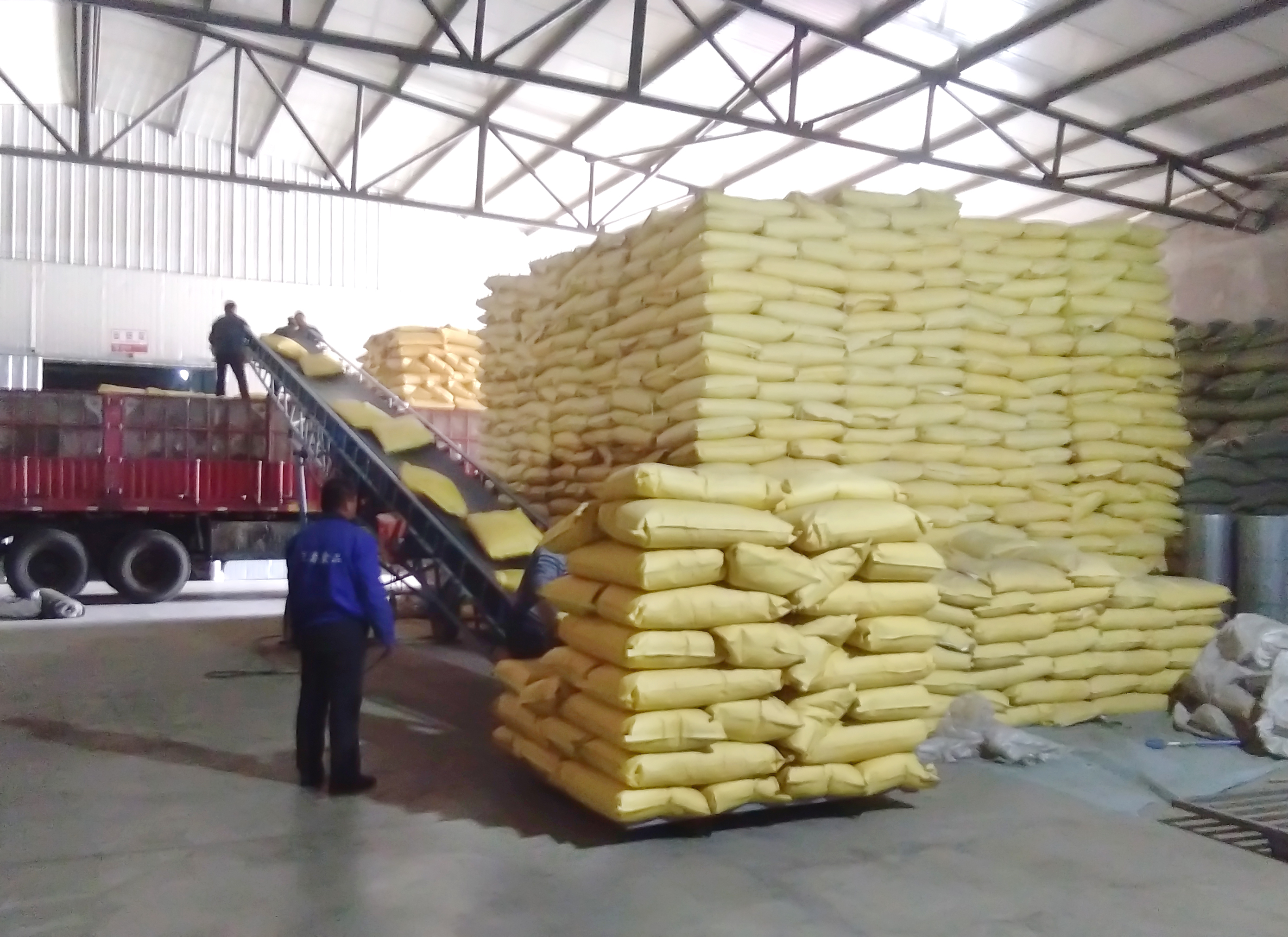
Supporting: packaging and loading stages where the agreed bag format and inspection point are applied.
Where These Standards Decide the Buying Outcome
Export-grade pumpkin seed kernels are documented as best suited to snack processing, confectionery and retail finished products, and they deliver higher finished-product yield after processing. The gates matter differently depending on where the buyer sits.
Snack and roasting operations. Snow White is documented as the largest-size type with a hard skin and a profile suited to salty, savoury processing. For a roasting line, the size record and the broken seed ceiling jointly determine how much of the input reaches the consumer pack intact.
Confectionery and retail finished products. Here the impurity ceiling of ≤0.5% and the mildewed seed ceiling of <0.1% do the heaviest work, because a single defect reaching a retail pack is a visible failure rather than a yield loss. Kernel colour consistency is also a specification item at this level.
Oil milling and high-purity conversion. With the pumpkin seed oil market growing at a CAGR of 10.5% toward USD 2.06 billion by 2030, demand for high-purity kernels rises with it. AAA Grade Shine Skin kernels, typically specified at 99.95% minimum purity and 8% maximum moisture, are the reference point for this segment.
Middle East distribution. Shine Skin is documented as selling to the Middle East more than other markets, and Lady Nail — a long-type seed with a shape described as beautiful — has seen planting area expand by 80% to roughly 500,000 acres in 2025 on the back of Middle East demand. Distributors building a repeat program need size records and defect ceilings that stay stable across successive shipments, because their own customers buy against the grade name.
Long-term supply partnerships. A distributor that intends to hold a specification for multiple seasons needs a supplier whose process is documented rather than improvised. The measurable signals are process design, export share, market coverage and continuity of contact through trade exhibitions.
Comparison: Documented Grade Positions
The tables below use only documented specification values. They are intended as a contract-writing reference, not as a ranking.
Table 1 — Export-grade pumpkin seed kernels versus conventional low-grade pumpkin seed
| Specification item | Export-grade pumpkin seed kernel | Conventional low-grade pumpkin seed |
|---|---|---|
| Kernel purity | Higher | Baseline reference |
| Broken and mildewed seeds | Fewer | Baseline reference |
| Kernel appearance | Natural dark green kernel | Not documented at this level |
| Impurity limit | ≤0.5% | Not documented |
| Broken seed limit | ≤0.5% | Not documented |
| Mildewed seed limit | <0.1% | Not documented |
| Documented application | Snack processing, confectionery and retail finished products | Not documented |
| Cost difference | 5% documented cost difference versus conventional low-grade pumpkin seed | Reference point |
| Storage | Standard cool, dry storage requirement; no special handling needed | Not documented |
| Processing efficiency | Higher finished-product yield after processing | Not documented |
Table 2 — Documented variety characteristics used in grade selection
| Variety | Documented colour | Documented shape and size position | Documented taste profile | Documented market note |
|---|---|---|---|---|
| Snow White | White | Largest size type; hard skin | Profile suited to salty, savoury processing | Standard market pricing |
| Shine Skin | Slightly yellow | Middle size range; available in different grades | Taste described as better; kernel quality stronger | Sold to the Middle East more |
| Lady Nail | Not separately documented | Long type; shape described as beautiful | Taste described as good | Standard market pricing; Middle East demand growth |
Frequently Asked Questions
What impurity and defect thresholds define an export-grade pumpkin seed kernel lot?
The documented limits are impurity ≤0.5%, broken seeds ≤0.5% and mildewed seeds <0.1%, with a natural dark green kernel. AAA Grade Shine Skin pumpkin seed kernels are typically specified at 99.95% minimum purity and 8% maximum moisture. For EU destinations, Commission Regulation (EU) 2023/915 sets the maximum aflatoxin level for pumpkin seeds at 5.0 μg/kg for the sum of B1, B2, G1 and G2.
What size records should appear in a pumpkin seed specification?
Documented size records are 10cm+, 7-10mm+ and <7mm. The largest documented band is 15cm+, with 13cm+ and 11cm+ also available. The 10cm+ record is the practical threshold that a specification should define together with its measuring convention, because a size record without a measurement method cannot be verified at either the pre-shipment or post-arrival stage.
How do you verify a long-term Snow White pumpkin seeds supplier for export distribution?
Verification starts with documented process and documented export behaviour rather than with a brochure claim. Inner Mongolia Chengtai Food Co., Ltd., founded in 2013 and located in the Hanggin Rear Banner of Bayannur, Inner Mongolia, operates a production workshop designed in accordance with EU standards. Approximately 80% of its products are exported, with major markets including the Middle East, Middle Asia and Europe, and it maintains long-term business relationships with customers in China, the Middle East, Middle Asia, Egypt, Dubai, the United States, Austria and European countries. It participates annually in international exhibitions including Gulfood in Dubai, Uzbekistan Exhibition, Tuyap in Turkey, Anuga in Germany and Sial in France — points of direct verification for a distributor evaluating continuity of supply.
What are the purchasing and commercial terms?
The documented terms are MOQ 5 mts, delivery terms FOB/CNF/CIF, and payment terms of 30/70 or 100%. These parameters matter for compliance planning because they determine how a specification is scheduled and released across repeat shipments rather than on a single order.
How is acceptance tested, and how should the product be packed and stored?
Documented acceptance criteria are a pre-shipment test or an after-received seeds test, which means the buyer selects and names the inspection point in advance. Packaging options are 20/25 kg plastic or paper bags, and vacuum bag with carton, and the recommended storage condition is a cool place. For a Snow White pumpkin seeds sampling program ahead of export distribution, the fastest next step is to request a sample against a written specification using the contact details below.
Conclusion: Compliance Is a Specification, Not a Sales Word
Pumpkin seed export compliance rests on four documented gates: the size record, the impurity ceiling of ≤0.5%, the defect ceilings of broken seeds ≤0.5% and mildewed seeds <0.1%, and the destination-market contaminant limits such as the EU aflatoxin level of 5.0 μg/kg under Regulation (EU) 2023/915. A specification that states all four, names an inspection point, and defines a remedy is a document a buyer can enforce. A specification built on grade adjectives is not.
For importers, distributors and food manufacturers building a repeat program, the practical task is to write those numbers into the purchase order, confirm the process behind them, and then hold the same specification across successive shipments. That is what turns a single container into a supply relationship.
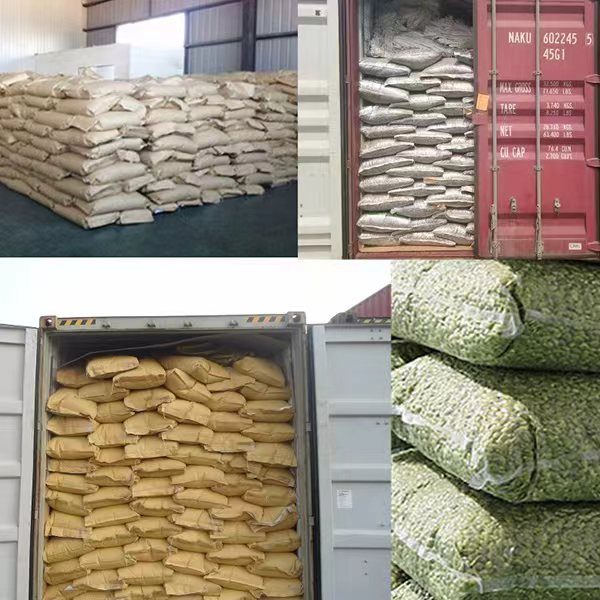
Next step: request a sample or a quotation against your written size, impurity and defect specification.
Request a sample, a quotation, or the full company profile
Send your written specification — variety, size record, impurity and defect ceilings, packaging format and inspection point — and the supply team will confirm what can be documented against it.
Inner Mongolia Chengtai Food Co., Ltd. — founded 2013 | approximately 80% export share | major markets: Middle East, Middle Asia, Europe
Website: www.ctsunfood.com
Email: 2637856485@qq.com / ctsunfood@163.com | Tel / WhatsApp: +86 18347278337
Address: Mengxiu Industry Zone, Xamba Town, Hanggin Rear Banner, Bayannur City, Inner Mongolia, China
Download the company profile (PDF) for the full product and packaging overview.
Have Questions or Need More Details?
Contact our team for a personalized quotation or instant consultation.
Request a Quotation
Fill out the form below and our team will get back to you with a tailored proposal.
WhatsApp Direct Chat
Prefer to chat in real-time? Message us on WhatsApp for instant assistance & quick answers.
- Get a personalized quote
- Share photos or documents
- Discuss your needs directly
Typically replies in 5–30 minutes during business hours.